• Hey look, the site has a new name that I’m not going to explain. Hey look again, the “about” section has been filled in. Hey look for a final time, the film rankings have expanded to 25 films.

    I just finished a rewatch of New Girl for the first time since it ended and it remains a very solid sitcom. Legitimately, some of the one liners in it are the best I’ve seen. That said, it has several bizarre eccentricities worth mentioning.

    Let’s begin with the title. The show is so named because Jess is the new roommate in an apartment with three guys. The aptness of this title, by design, dwindles with each subsequent episode and there’s an argument to be made that it doesn’t even apply by episode two because Winston moves in after her.

    We should actually talk about Winston, a character that only enters the show because the actor that played Coach, Damon Waynes Jr., had to drop out after the pilot. This is made weirder by the fact that Waynes returns for a season long stint as a cast regular later in the series.
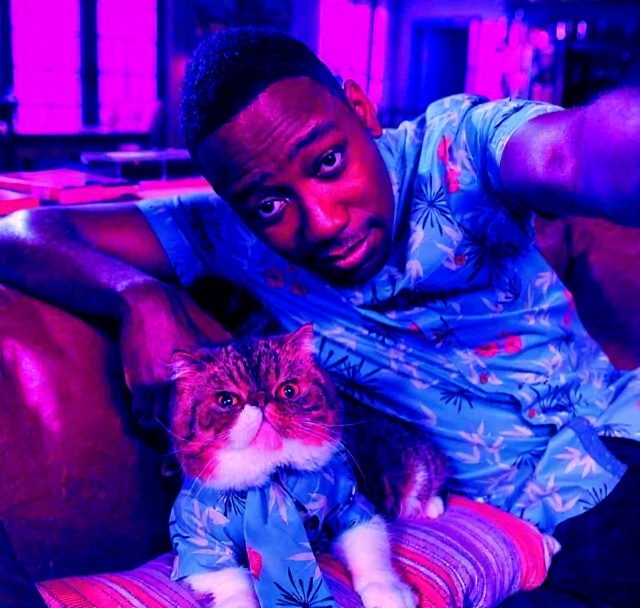
    Now we can mention the craziness of the cameos this show was able to pull. Taylor Swift was one thing (her cameo is made funnier by a throw away line later in the series about Jess being afraid for her safety when she is living alone in New York), but somehow Prince liked it so much that he came on and let the writers just make an entire episode about him. For those not in the know, Prince doesn’t act.

    It’s interesting seeing how many noteworthy quirks there were in a sitcom that seems to be mostly forgotten by the oeuvre at his point in time. Max Greenfield was the breakout star of the show and he’s been stuck in sitcom purgatory since then (no apologies to fans of The Neighborhood, find yourself some better taste).


  • (Noun) the quality or state of being verisimilar.

    Well that’s not very helpful, Merriam-Webster.

    Verisimilar (adjective)

    1. having the appearance of truth.
    2. depicting realism (as in art or literature).

    I can’t remember where I first heard the word, but I remember being fascinated by it. The idea of truth in fiction is paradoxical. I mean it’s fiction, whatever you say is real, is real. That’s why we like it, because we’re not constrained by pesky reality. Yet verisimilitude is actually a thing and it relates to the suspension of disbelief.

    Storytelling is a collaborative effort between author and reader. Readers help authors to make stories work. Otherwise, anyone listening to King Arthur’s tale would shut it down as soon as Merlin is introduced. For example:

    “This is Merlin, he’s a wizard, he can do magic.”

    “There’s no such thing as wizards.”

    “Well in this story there is.”

    “But I’ve never seen one.”

    “I don’t want to tell you this story anymore.”

    With fiction, readers need to suspend their disbelief, at least a bit. Verisimilitude refers to an author’s duty to minimize the amount of work that the reader has to do to engage with a story. When a character wants to get somewhere, the need a vehicle or they need time to walk and this creates complications for the characters to overcome. It doesn’t make sense if the character just jumps up and flies there, unless they’re Superman.

    And I don’t find Superman to be all that compelling of a character.

    Interestingly, verisimilitude has a separate, philosophical definition posed by Karl Popper. It’s the idea that when you’re present with two false statements, one can be closer to the truth than the other.

    “I’m wet because it’s raining outside.”

    “I’m wet from a pipe bursting at home.”

    In reality, I’m wet from freaking out during a full-on bathroom disaster and no pipes burst, BUT I was at home when it happened. There’s a kernel of truth there. That’s truthlikeness. That’s verisimilitude. Popper even wrote a function to calculate verisimilitude. Use it with grace:

    I bring it up because that’s what I named the blog, for now. I’ll probably change it because a quick check of the .com for the word reveals that a film production company has already co-opted it. Even though the last thing they seem to have made was in 2015, I’d like to think I’m original enough to hold the .com for whatever label I stumble on for this blog.

    But for now, it’s verisimilitude. Because we believe in credibility around here.

  • How many one-word movie titles are there? I found a list that has 1111 and funnily, it only takes until the second entry for a title to repeat (Abduction, 2011 & 2019). There’s something nice about a one word movie title. It provides an air of mystery around it and doesn’t overstay its welcome. Over a quarter of the Academy Award Best Picture winners have a one-word title including seven of the last ten, so if you want to win an Oscar . . . keep it brief.

    I’ve already named an instance where two movies used the same one-word title, but surely Abduction (2019) could have changed to something else. Surely there must be a word in the English language that hasn’t been co-opted to label a struggling auteur’s shot at immortality. The premise is easy enough to prove. I just have to come up with a word that I doubt someone has made a movie out of.

    Acetaminophen. It’s not even the first painkiller that comes to mind, surely no one has gone to that well yet.

    Well shit.

    The longest word in the English language is pneumonoultramicroscopicsilicovolcanoconiosis, per Merriam-Webster. There isn’t a movie called that yet, though there are a few podcast episodes out there. It’s a lung disease caused by silicates found in volcanic ash and honestly, that’s not the worst word to work backwards from to make a movie. Have a wizard cast a spell on the volcano that turns everyone that breathes the ash to turn into zombies and you’ve cranked out a summer blockbuster.

    So I challenge aspiring filmmakers to hit all of them. Make a movie for every word in the dictionary so that anybody that tries to make a one-word title in the future has to copy you . . . and maybe has to pay you a small fee for the rights to use the name of your zombie-volcano movie that no one saw.

    As far as I can tell, there isn’t a movie called Movie yet.

  • Today was a busy day, so there wasn’t to much time to work on anything substantial. I know I said I’d talk about “verisimilitude” today, but lets amend that to “I’ll talk about it when you’re old enough.” Instead I’ll take the opportunity to tout the only show I’ve actually enjoyed enough to binge lately, and that is Max’s The Pitt.

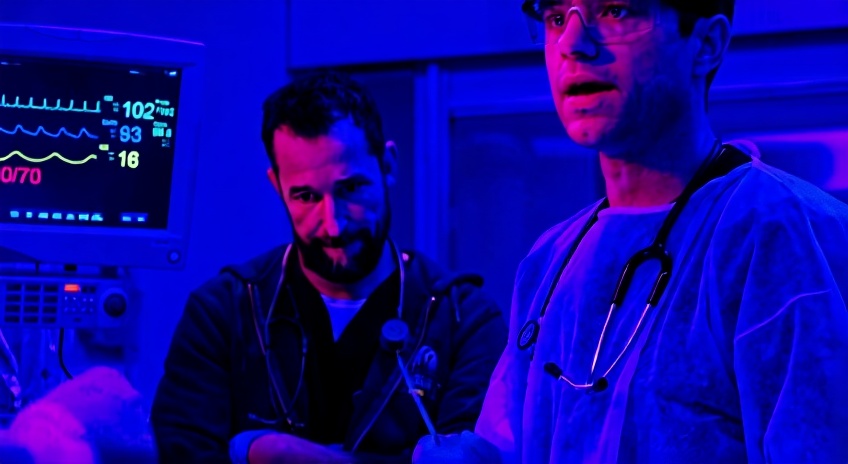
    The pitch is simple: A medical drama where the entire season is set over the course of a single shift in a Pittsburgh emergency room in real time. The pace is nonstop and that’s the point. It wants to convince you that what emergency room doctors have to go through is crazy and, by my measure, it is successful at doing so.

    It’s difficult to not draw connections between The Pitt and ER as R. Scott Gemmill, John Wells, and Noah Wyle all carried on over from the latter. It’s weirdly comforting to see Wyle playing a doctor again, this time an elder statesman that feels like a safety net for both the characters and the audience. It’s like we finally get to see the man John Carter turned into.

    Actually, Michael Crichton’s estate felt the same way and is now suing the showrunners for copyright infringement. My two cents is that it is distinct enough from ER that it should be able to defeat infringement allegations on the merits, but as with most civil cases, they’re destined to settle it out of court because Max wasn’t able to secure dismissal based on the pleadings. Also, my two cents are worth more than a U.S. two cents because I passed the bar exam.

    So, in these troubled times, enjoy a bunch of doctors working a shift. Get some insight from what is apparently the most accurate medical show of all time. Bask in Noah Wyle’s warm embrace and maybe say a prayer for a second season.

  • I’m calling this post zero because I still don’t really know what the point of this thing I plopped online is. I knew I wanted to start a media blog to track my thoughts about the different forms of fiction I consume and cement them in a platform with some level of permanence. I knew I wanted it to be public for a few different reasons.

    1. To keep me honest by both forcing myself to post reliably and to have those posts achieve a baseline level of quality. I’ve kept private journals before. They get messy really quickly.
    2. To entertain a lie to myself that by broadcasting my thoughts publicly I’m am winning the world over to my way of thinking in a way similar to how one might slightly raise the ocean level if they pour a little of their bottled water into it.
    3. To entertain another lie to myself that someone might read the things I write after I’ve checked out and that can somehow serve as a kind of legacy.
    4. To entertain a final lie to myself that by broadcasting my opinion on say . . . why Back to the Future works better with its flawed time travel mechanics than it would with a rigorously crafted set of rules might help me connect to people out there in the world who strongly agree or disagree with the sentiment.

    So that’s the why. Now the what.

    I only have two goals for now: To journal every day and to work towards larger features every week. Seeing as I called this post #0000, it’s natural to assume that the entries will conclude at post #9999. That means that this blog will close its doors a mere 27.39 years from now when I’m in my 60’s. That’ll be a fun day.

    Until then, expect summaries of the content I consume and previews of the things that look interesting on the horizon. My first project will be attempting to explain the concept of “verisimilitude” as it relates both to fiction and philosophy.

    Til morrow.